
Porcelain countertops are often discussed as if they are simply a newer alternative to granite, quartz, or marble. That is too simplistic. In a busy kitchen, the real question is not whether porcelain is popular, but whether it can handle daily wear, heat, spills, and long-term use without adding unnecessary upkeep.
With more than 20 years of fabrication experience, Alpha Granite looks at porcelain kitchen countertops through the lens of performance, installation, and practical durability.
The Main Benefits of Porcelain Countertops in High-Traffic Kitchens
For a busy kitchen, the value of porcelain comes down to how well it performs under regular use. The main benefits of porcelain countertops are not just about appearance or trend appeal. They are about how the surface holds up when the kitchen is used the way real kitchens are used.
1. Strong stain resistance
Porcelain is a non-porous surface, which means it is highly resistant to stains from common kitchen spills. In a high-use kitchen, that matters because the countertop may see coffee, oils, sauces, and other messes on a regular basis.
2. Lower upkeep
One of the clearest benefits of porcelain countertops is that they do not require the same periodic sealing to maintain the surface that many natural stone materials do. For a homeowner who wants less upkeep, that can make day-to-day care more manageable.
3. Strong heat resistance
Porcelain offers excellent heat resistance and can withstand high temperatures better than many other countertop materials. In kitchens where hot pots and pans are part of normal use, that added protection is a practical advantage.
4. Durable everyday performance
Porcelain is highly resistant to daily wear and tear, which makes it a durable option for kitchen countertops in active households. In spaces where the countertop is used constantly, that long-term durability is one reason porcelain delivers strong performance.
5. Flexibility beyond the kitchen
Porcelain also works well in kitchen and bathroom applications, and in some outdoor kitchen projects where the installation conditions are right. That broader application range makes porcelain countertop slabs useful for homeowners who want consistency across multiple spaces.
6. Large-format fabrication potential
Large-format porcelain slabs can support long countertop runs, waterfall applications, wall cladding, and other custom features. When handled by an experienced fabrication team, that flexibility gives homeowners more options without giving up performance.
How Porcelain Compares to Granite, Quartz, and Marble in a Busy Kitchen
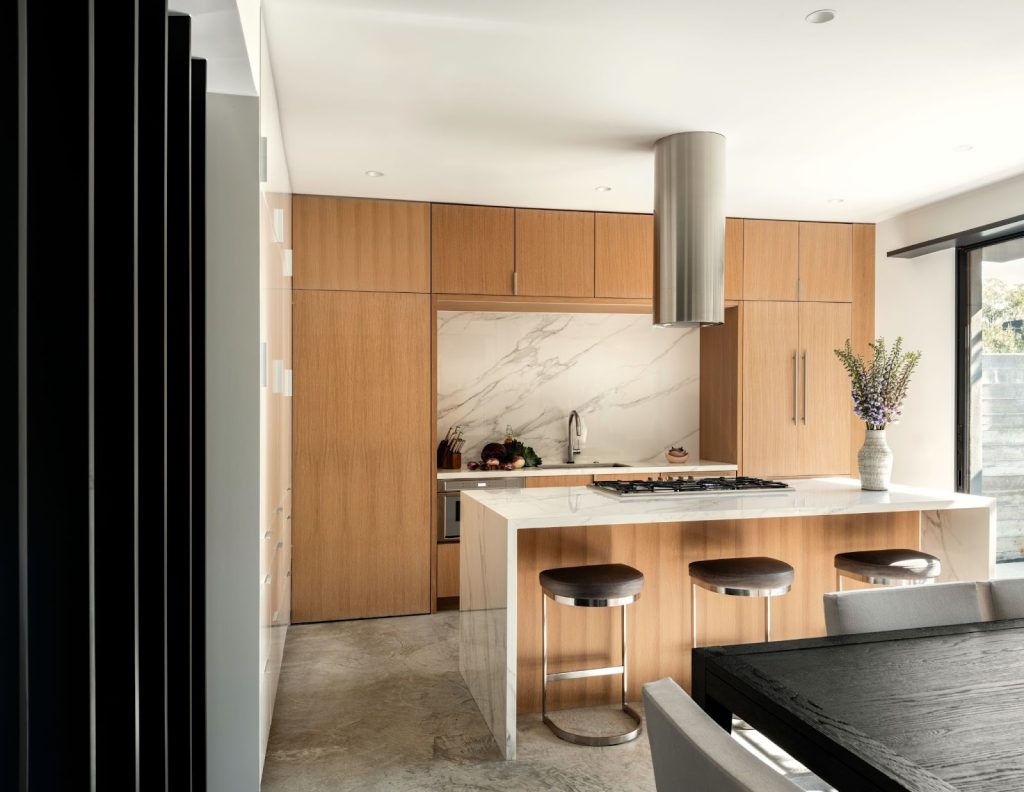
Porcelain is often compared to granite, quartz, and marble because all four can be used for kitchen countertops, but they do not perform in exactly the same way. In a busy kitchen, the better choice usually depends on how much maintenance is realistic, how the countertop will be used, and what the project requires from fabrication and installation.
Porcelain vs. Quartz
Quartz countertops are also non-porous, which is one reason they are often chosen for lower-maintenance kitchens. Like porcelain, quartz can resist many common spills well and is generally easier to care for than some natural stone surfaces.
Where porcelain often pulls ahead is heat resistance. Porcelain generally handles high temperatures better, while quartz may be more vulnerable to direct heat exposure. In kitchens where hot cookware is part of daily use, that difference is worth paying attention to.
Porcelain vs. Granite
Granite countertops are durable, time-tested, and still a strong choice for many kitchens. As a natural stone, granite offers solid everyday performance, but it usually needs to be sealed and maintained over time.
Porcelain offers a non-porous surface with less maintenance, which can make it appealing to homeowners who want strong stain resistance without routine sealing. Granite may still be more forgiving in some edge and impact situations, depending on the project, so the better option is not always the same in every kitchen.
Porcelain vs. Marble
Marble is a natural stone with a different maintenance profile than porcelain. It can bring the look of natural stone to a kitchen, but it is generally more vulnerable to etching and staining in a high-use space.
Porcelain can mimic the look of natural stone while offering more stain resistance and lower upkeep. For homeowners comparing granite or marble to porcelain, that often becomes a practical decision about maintenance as much as material preference.
The main point is that the right choice is not just about which material looks strongest on paper. It depends on how the kitchen is used, how much upkeep is realistic, and whether the installation demands call for a specific type of countertop material.
What Homeowners Should Consider Before Choosing Porcelain
Porcelain countertops offer strong performance, but the material still needs the right application, the right fabrication approach, and the right installation conditions. That is one of the most important things to know about porcelain countertops before choosing porcelain for a project.
- Porcelain countertops are not the right fit for every project. The material performs well in many kitchens, but the project conditions still matter.
- Edge detailing, cutouts, support, and installation accuracy all matter. These details affect how well the countertop performs once it is in use.
- Not every fabricator approaches porcelain slab fabrication the same way. Experience matters, especially with large-format porcelain slabs.
- Handling and planning are part of the decision. Porcelain requires careful transport, fabrication, and installation planning from the start.
- Low-maintenance does not mean no care required. Porcelain may reduce upkeep, but proper use and routine care still matter.
- Performance depends on both the slab and the execution. Expectations often go wrong when the focus stays on the finished surface and not on the fabrication process behind it.
If you’re considering porcelain, these are not reasons to avoid the material. They are simply part of making a well-informed decision.
Porcelain Fabrication and Installation Require the Right Expertise
Porcelain slab fabrication requires a different level of precision than many homeowners expect, especially around cutouts, support, transport, and edge finishing.
Large-format porcelain slabs are not handled the same way as every countertop material, which is why installation accuracy matters just as much as surface performance. Digital templating helps improve fit, and Slabsmith technology can support layout planning and material review where needed.
Alpha Granite brings more than 20 years of experience, Accredited Natural Stone Company status, and a state-of-the-art fabrication facility to this work. That matters because we’re one of the few fabricators in Central Texas with deep expertise in porcelain fabrication and installation for high-quality porcelain countertop projects.
Visit Our Austin or Kerrville Showroom to Explore Stone Samples
Porcelain can be a strong countertop material for high-traffic kitchens, but the right choice depends on more than surface performance alone. It also depends on how the kitchen is used, what level of upkeep is realistic, and what the project requires from fabrication and installation.
Visit our Austin or Kerrville showroom to view stone samples, review porcelain alongside granite or quartz and other surfaces, and speak with a team that can help you evaluate real-world performance, installation conditions, and long-term maintenance expectations.
Frequently Asked Questions About Porcelain Countertops
Are porcelain countertops good for busy kitchens?
Yes. Porcelain countertops are ideal for many busy kitchens because porcelain is non-porous, resistant to stains, and well-suited to repeated daily use. For homeowners comparing surfaces for active spaces, that combination often makes porcelain a strong choice for kitchens.
Do porcelain countertops need to be sealed?
No, porcelain typically does not need the same sealing routine required for many natural stone surfaces. Since porcelain is non-porous, it generally involves less maintenance in day-to-day use. That is one reason many homeowners explore porcelain when they want a lower-upkeep surface.
Are porcelain countertops heat-resistant?
Porcelain offers strong heat resistance and can withstand high temperatures better than many countertop materials. That makes it especially useful in kitchens where hot cookware is part of regular use, though proper care still matters.
What are the pros and cons of porcelain countertops?
The pros and cons of porcelain usually come down to performance versus fabrication complexity. The pros of porcelain countertops include stain resistance, lower maintenance, and dependable heat resistance. The main considerations are edge detailing, transport, support, and the need for experienced fabrication and installation. In other words, porcelain countertops aren’t difficult materials, but they do require the right approach.
How does porcelain compare to granite or quartz?
Porcelain, granite, and quartz each bring different strengths to a project. Porcelain combines low maintenance, heat resistance, and a non-porous surface. Granite is durable and natural, but usually needs sealing. Quartz is also lower maintenance, but it is generally more sensitive to direct heat. The better option depends on how the kitchen functions and what the homeowner expects from the surface.