
If you’re comparing soapstone vs granite, you’re likely trying to understand which material will perform better in your home. Both are natural stone countertop options with strong reputations, but they differ in hardness, maintenance requirements, and how they age over time.
The differences are not cosmetic; they are structural, and we’ll walk you through all of them and guide you with years of experience fabricating and installing both surfaces.
Granite Countertops: Structure, Performance, and Maintenance
What Is Granite?
Granite is an igneous natural stone formed under extreme heat and pressure deep within the earth. That geological process creates a dense, crystalline structure that gives granite its strength and long-term stability. Among natural stone countertop materials, it is considered one of the hardest and most durable options available.
Each granite slab reflects the mineral composition of the region where it was quarried. While colors and patterns vary, the defining characteristic is structural integrity. When properly fabricated and installed, granite countertops provide a durable, natural surface designed for consistent, long-term use.
Granite’s Durability and Daily Use
Granite’s mineral density makes it highly resistant to scratches and surface wear. In active kitchens and high-traffic areas, that hardness plays an important role. Items placed on the countertop, routine meal preparation, and daily cleaning typically do not compromise the surface when it is maintained correctly.
Granite is also heat-resistant. It tolerates elevated temperatures better than many engineered materials. That said, responsible surface care is still recommended. Using trivets or hot pads helps preserve both the stone and the finish over time.
For homeowners evaluating granite vs soapstone, hardness is often one of granite’s defining performance advantages.
Granite’s Porosity and Sealing Needs
Granite is a porous stone. While it is dense, it can absorb moisture if left unprotected. For that reason, granite countertops require sealing. A properly applied sealant reduces the likelihood of staining and helps maintain long-term durability.
Sealing is not complicated, but it is part of ownership. The frequency depends on the specific granite slab, how the countertop is used, and environmental factors. In most residential kitchens, sealing is a manageable and periodic maintenance step rather than a constant concern.
Understanding this requirement upfront prevents unrealistic expectations. Granite is extremely durable, but it is not maintenance-free.
Fabrication and Installation Considerations
Because granite is dense and heavy, precision during fabrication is critical. Cutting, edge profiling, and seam placement require technical accuracy and proper tooling. Slab handling must be carefully managed to protect structural integrity before installation.
Digital templating improves measurement accuracy and reduces margin for error. Seam positioning, overhang support, and cutout placement must all be planned before fabrication begins. These steps are especially important in large kitchen countertop installations or complex layouts.
As an Accredited Natural Stone Company, Alpha Granite follows established industry standards throughout the fabrication process. Precision at this stage directly influences long-term performance. A durable stone still requires expert execution to perform as intended.
Soapstone Countertops: Composition, Behavior, and Care
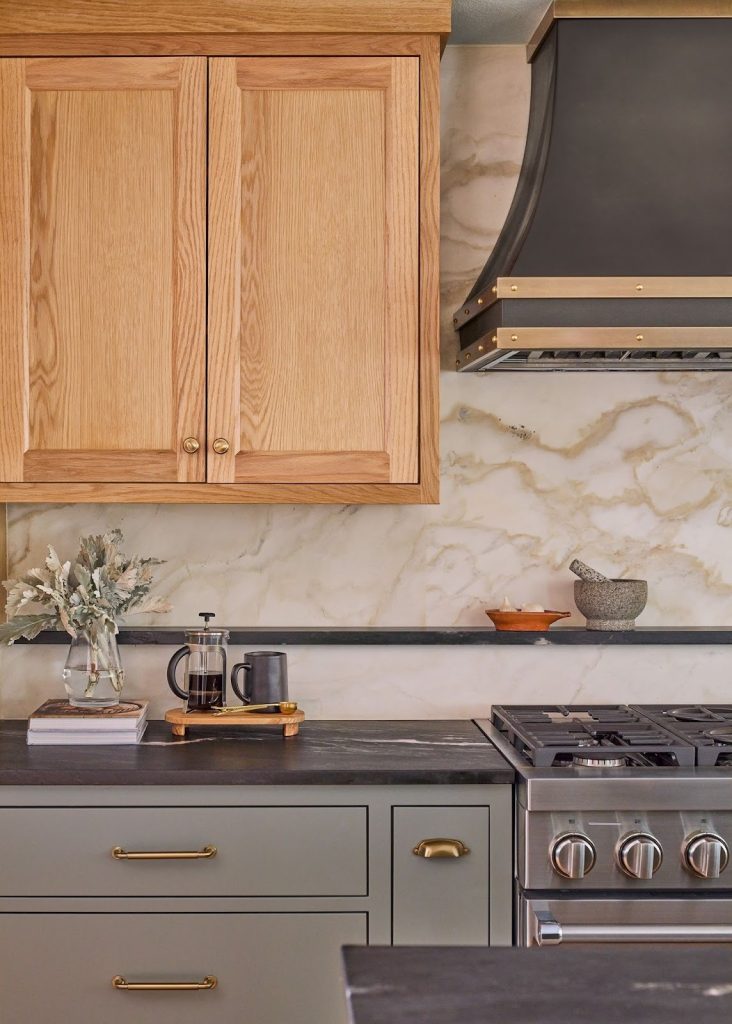
What Is Soapstone?
Soapstone is a natural stone composed primarily of talc, along with varying amounts of chlorite and other minerals. Its talc content gives it a softer feel compared to granite, which directly influences how it performs and how it is fabricated.
Unlike many other natural stone countertop materials, soapstone is nearly non-porous. It does not absorb liquids in the same way porous stones do, and it does not require sealing. That characteristic makes it structurally different from granite and changes the long-term maintenance approach.
Understanding this composition is essential. Soapstone is durable, but its performance profile is distinct.
Soapstone Surface Durability
Soapstone is resistant to staining because it is nearly non-porous. Moisture does not penetrate the surface in the same way as it can with other natural stones.
However, it is softer than granite. In active kitchens, soapstone may develop surface marks or minor scratches over time. This is not a structural weakness but a material characteristic. In many cases, light sanding can reduce or blend minor surface marks if desired.
For homeowners evaluating soapstone vs granite, this difference in hardness is often central to the decision. Soapstone performs reliably, but it responds to use differently than harder stone.
Soapstone’s Heat Performance
Soapstone is a heat-resistant natural stone. It performs well in kitchen environments where elevated temperatures are common.
As with any countertop material, responsible surface care is recommended. Using trivets or hot pads helps protect both the stone and the surrounding finishes. Heat resistance should be understood as a material strength, not an invitation for unnecessary stress on the surface.
Soapstone’s Patina and Long-Term Evolution
One of soapstone’s defining characteristics is how it changes over time. The surface will naturally darken as it is exposed to use and air. This process creates a patina, which is a form of natural oxidation rather than deterioration.
Some homeowners apply mineral oil to even out the tone of the surface or deepen its color. This is optional and aesthetic in nature, not structural maintenance. Over time, the stone typically develops a more uniform appearance as it ages.
Setting accurate expectations here is important. Soapstone does not remain visually static. Its evolution is part of its material behavior.
Fabrication and Installation Considerations
Because soapstone is softer than granite, fabrication requires a different approach. Tooling, edge detailing, and finishing methods must account for the stone’s density and composition.
Although it is softer, proper structural support is still required. Slab thickness, overhang allowances, and seam placement must be planned with the same level of precision applied to any durable natural stone installation.
An experienced fabrication team understands these nuances. Execution, not just material selection, determines long-term performance.
As an Accredited Natural Stone Company, Alpha Granite follows industry-recognized standards throughout countertop fabrication and installation. Precision cutting, careful slab handling, and methodical installation practices directly influence how the finished surface performs over time.
How Do Granite and Soapstone Compare in Real-World Use?
After understanding each material individually, the practical question becomes how they differ once installed. Below is a direct comparison based on performance characteristics rather than preference.
Scratch Resistance and Surface Wear
Granite
- Harder mineral composition
- Higher resistance to scratches in daily kitchen use
- Surface remains visually stable longer under heavy activity
- Less forgiving if damage does occur
Soapstone
- Softer structure due to talc content
- More likely to show surface wear over time
- Minor scratches can often be minimized with light refinishing
- Surface evolution is part of the material’s character
Maintenance Commitment
Granite
- Porous material
- Requires periodic sealing
- Sealing helps reduce moisture absorption and staining
- Maintenance schedule depends on use and environment
Soapstone
- Nearly non-porous stone
- Does not require sealing
- Some homeowners apply mineral oil to manage tonal consistency
- Patina develops naturally over time
Performance in Different Use Environments
Granite
- Commonly selected for high-traffic kitchens
- Performs well in environments with heavy cookware and frequent use
- Often specified in commercial or high-demand settings
Soapstone
- Performs reliably in residential kitchens
- Suitable when a natural surface change over time is acceptable
For example, in a commercial prep environment in Austin, granite’s hardness provides measurable resilience under sustained activity. In a residential kitchen in Cedar Park, soapstone may align well when surface evolution is expected and understood.
Which Material Is Better? It Depends on Performance Priorities
The question behind soapstone vs granite is usually about alignment, not superiority. Both are durable natural stone countertop materials. The better choice depends on what matters most in your space.
- If scratch resistance and surface hardness are priorities, you can choose granite.
- If you prefer a nearly non-porous stone that does not require frequent sealing, soapstone might be right for you
- If long-term surface stability with minimal visible change is important, granite may align better.
- If you are comfortable with a material that develops character and patina over time, soapstone may be appropriate.
Neither material is universally superior to the other. Each performs well when expectations match how it will be used. Proper fabrication and installation ensure that either option delivers long-term durability.
Schedule a Consultation at Our Austin or Kerrville Showroom
If you are evaluating soapstone or granite for kitchen or bathroom countertops in Austin, Round Rock, Georgetown, Cedar Park, Leander, Dripping Springs, San Marcos, or New Braunfels, seeing the materials in person can clarify the differences.
In our showroom, you can review natural stone options side by side, examine veining patterns, and understand how a granite countertop differs from a soapstone slab in structure and surface behavior. While both are popular choices among many homeowners, the right material for your home depends on how you plan to use it.
Our team can walk you through fabrication considerations, sealing expectations, and long-term performance so your new countertop decision is grounded in function rather than assumption.
FAQ: Soapstone vs Granite Countertops
1. Is soapstone more durable than granite?
Granite is harder and more resistant to scratches. Soapstone countertops are generally softer but remain durable natural stone surfaces. The difference comes down to surface hardness and how much visible wear you are comfortable with over time.
2. Do granite countertops need to be sealed?
Yes. Granite is porous, and granite needs periodic sealing to help protect against staining. The schedule depends on the specific slab and how the kitchen countertop is used.
3. Does soapstone need to be sealed?
No. Soapstone doesn’t require sealing because it is nearly non-porous. Some homeowners apply mineral oil to influence the surface tone as it darkens naturally, but that step is optional.
4. Can both materials handle heat?
Both soapstone and granite countertops are heat-resistant natural stone options. However, it is still recommended to use trivets or hot pads rather than placing hot pots and pans directly on the surface. Responsible use preserves both the stone and the finish.
5. How do I choose between soapstone or granite for my kitchen or bathroom?
To compare soapstone and granite effectively, consider how the space will be used. For high-traffic kitchen countertops where surface stability is a priority, granite is often selected. For homeowners who prefer a nearly non-porous material that develops a matte finish and patina over time, a soapstone countertop may align better. Both materials are durable natural stone countertops when properly fabricated and installed.