
Matching your countertop and backsplash does not mean picking the same stone in the same color. That assumption sends a lot of Central Texas remodels sideways. A pairing that works starts with how each surface behaves in daily use, not how it looks in a photo. Get the material, finish, and seams right and the two read as one kitchen.
Get them wrong and you notice glare and grout lines every morning. We have fabricated stone for Central Texas kitchens since 2003. The pairings that hold up are the ones locked before the template, not after install.
Start With the Countertop Material First
The countertop usually anchors the whole decision, so choose it first. It covers more square footage, takes more daily abuse, and sets the tone the backsplash has to work with. Once the countertop material is set, your backsplash options get easier to narrow instead of harder.
A designer can guide the look you want. Our job is to help you understand how each material behaves before it gets cut. That distinction matters, because the countertop and backsplash have to agree on function first.
Natural Stone Brings Variation That Needs Real Sample Review
Natural stone moves. Granite, marble, and quartzite carry veining and mineral variation that no two slabs share, which is exactly why a photo cannot make this decision for you
A granite backsplash cut from the same material as the countertop can still shift in pattern as the veining travels up the wall. That is normal, which is why the fabrication layout should account for:
- Veining direction: stone patterns can run busy or calm depending on how the slab is cut and oriented.
- Color depth: granite and quartzite often look darker or lighter on a wall than on a horizontal counter.
- Finish behavior: a polished surface bounces light differently than a honed one, and that changes how the backsplash feels.
Planning these details before cutting helps the countertop and backsplash feel connected rather than pieced together. Should we mention here that we offer to do SlabSmith layouts?
Engineered and Porcelain Surfaces Need Fabrication Planning
Quartz and porcelain behave more predictably than natural stone, but they ask more of the fabrication plan. A quartz backsplash offers consistent color with no veining surprises, which many homeowners want behind a busy counter.
Porcelain and large-format panels open the door to a full-height slab backsplash with very few seams. That look depends on precise cutting and careful handling, not just the material itself. Alpha Granite is one of the few fabricators in Central Texas with real porcelain fabrication and installation expertise, so a large-format panel gets planned before it is ever cut. If you are weighing these two, our breakdown of how quartz and porcelain compare in real-world use explains the tradeoffs without the style guesswork.
Compare Slab Backsplash and Tile Backsplash by Function
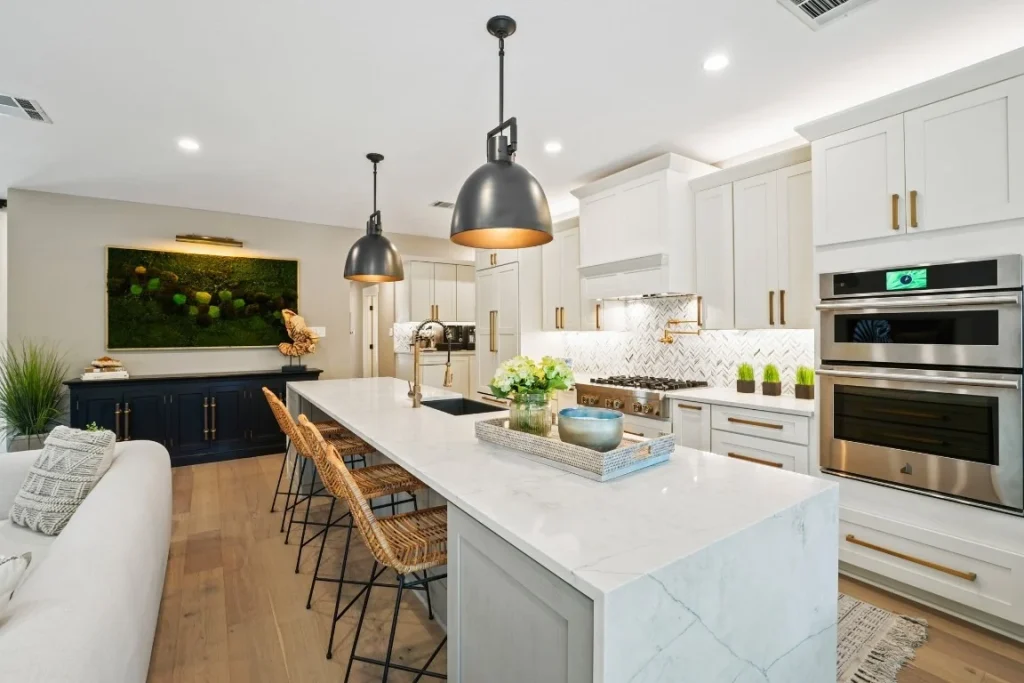
Once the counter is set, the biggest backsplash decision is slab or tile. Neither is better on its own. They solve different problems, and the right pick depends on how you cook, how you clean, and how much visual continuity you want.
Think about the two options through daily function rather than trend. Here is how they actually differ in a working kitchen.
Slab Backsplash Reduces Grout Lines but Raises Planning Needs
A slab backsplash continues your countertop material up the wall with almost no joints. Fewer grout lines mean fewer places for grease and grime to collect, which is a real advantage on the cooktop wall.
The tradeoff is planning. A slab backsplash asks for more coordination up front:
- Seam placement: long runs may still need a seam, and where it lands should be decided before fabrication.
- Outlet cutouts: switches and outlets have to be measured into the panel, not added later.
- Material continuation: matching the counter run up the wall takes layout planning so the pattern flows.
Handled early, a slab backsplash gives you a clean, low-joint wall that wipes down fast.
Tile Backsplash Gives Flexibility but Adds Grout Maintenance
A tile backsplash trades continuity for flexibility. You get more layout options, easier repairs if one tile chips, and a lower entry cost than a full slab in many cases.
The honest tradeoff is grout. Grout lines behind a cooktop collect splatter and need regular cleaning and occasional resealing to stay looking right. That is manageable for many homeowners, but you should know it going in. A tile backsplash is not automatically lower maintenance than a slab. It simply shifts the maintenance from the surface to the joints.
Think About Finish, Cleaning, and Daily Use
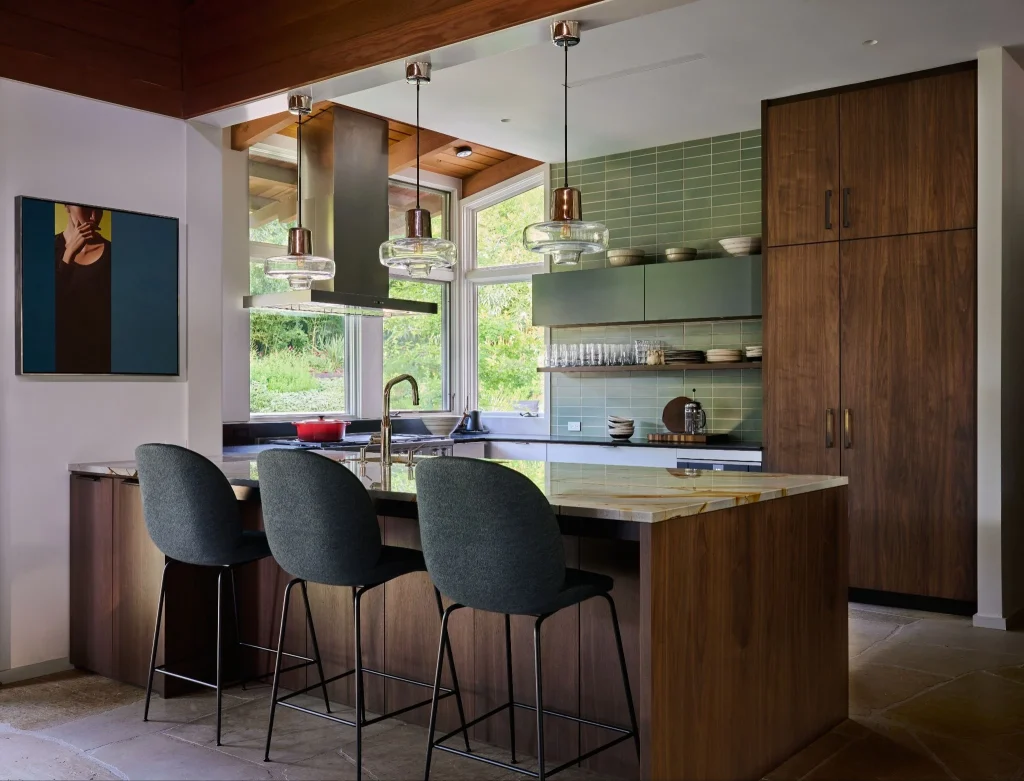
Finish decides how a backsplash lives with you. Polished, honed, and textured surfaces each catch light and hold grease differently, and the wall behind your range takes the most abuse in the kitchen.
A polished surface reflects more light and wipes clean easily, but it also shows fingerprints and water spots faster. A honed or matte finish softens glare and hides light marks, though it can hold onto grease film if you cook often with oil. The cooktop wall and the sink wall are the two zones worth thinking hardest about, because that is where splatter, steam, and water exposure concentrate. Because the shop matters as much as the slab, fabrication and installation still shape how a finish performs long after the counter is in.
For the easiest cleanup behind a range, a low-joint slab in a wipeable finish usually wins. For flexibility and repairability, tile earns its place. Match the finish to how messy your cooking really gets, not to the cleanest photo you saved.
Confirm the Details Before Template and Installation
Coordination fails when details get decided too late. The template appointment is where measurements, cutouts, and seam locations get locked, so the backsplash choices need to be settled before we cut.
A few decisions carry the most weight before fabrication begins:
- Backsplash height: standard four-inch, mid-height, or full-height changes the material and the seam plan.
- Outlet and switch placement: these become cutouts in a slab, so their locations have to be final.
- Appliance and cooktop zones: range height and hood clearance affect how far the backsplash runs.
- Sequence with other trades: cabinets, appliances, and electrical all need to be set before templating.
Digital templating and Slabsmith layout planning let us map seams and cutouts precisely, so you see the plan before the stone is cut. That is the whole point of deciding early. It removes the surprises that show up after install, when they are expensive to fix.
Visit the Showroom to Compare Materials in Person
The fastest way to coordinate a countertop and backsplash is to see the samples together under real light. Visit the Alpha Granite showroom in Austin or Kerrville to compare materials side by side and review finishes. When the material fit is clear, request a quote and we will help you lock the details before your template. That is coordination without the guesswork.
FAQs About Countertop and Backsplash Pairing
Should countertops and backsplash match exactly?
They can, but they do not have to. Many homeowners choose a full-height slab backsplash in the same material as the countertop to create visual continuity and reduce grout lines. Others pair the countertop with tile or a contrasting surface. The right choice depends on the material’s movement, finish, surrounding colors, and the look you want.
Should I choose the countertop or backsplash first?
Choose the countertop first. It covers more surface, takes more daily wear, and sets the practical constraints your backsplash has to work within. Once the countertop material and finish are set, narrowing backsplash options gets much easier. Deciding in that order also keeps your template and fabrication plan clean.
Is a slab backsplash easier to clean than tile?
Usually, yes. A slab backsplash has almost no grout lines, so grease and grime have fewer places to collect on the cooktop wall. Tile is still very cleanable, but the grout joints need regular cleaning and occasional resealing. If low-maintenance cleanup behind the range is your priority, a slab backsplash has the edge.
Can quartz or porcelain be used as a backsplash?
Yes. A quartz backsplash gives you consistent color with no veining surprises, and porcelain or large-format panels can create a full-height backsplash with very few seams. Both depend on precise fabrication, especially at outlet cutouts and long runs. Porcelain in particular rewards a shop with real large-format experience, which is one area where Alpha Granite specializes.
Who should help with the design pairing?
A designer or your own eye should lead the aesthetic direction. Our role is to guide material behavior, finish, seam planning, and fabrication so the pairing performs in daily use. Bring your design direction to the showroom, and we will help you confirm the material fit and the details before we cut. That split keeps the look yours and the fabrication sound.