
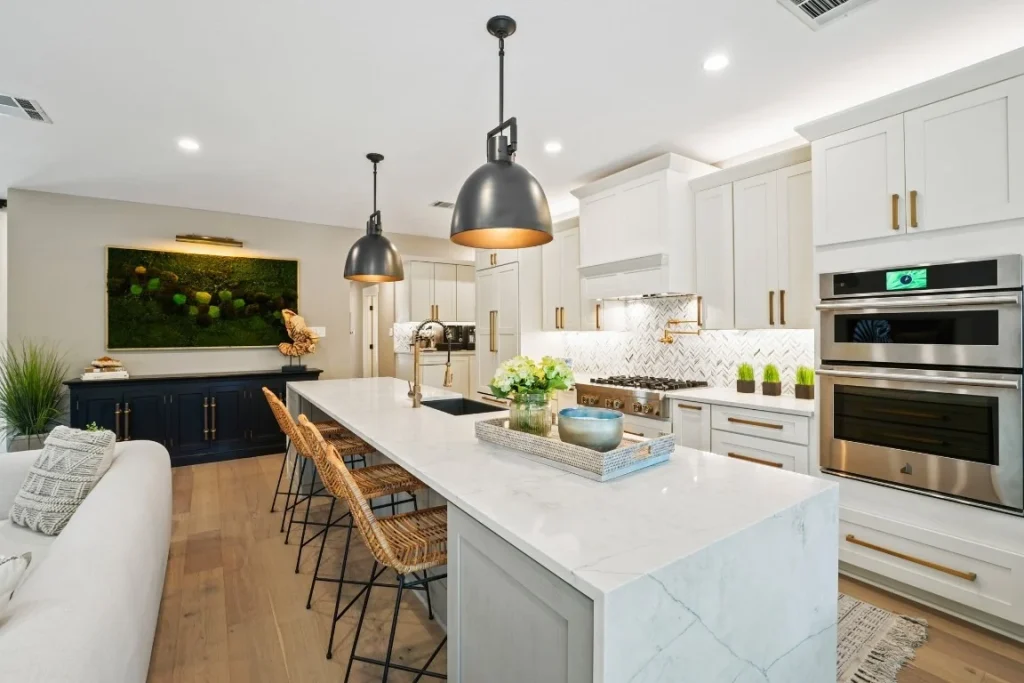
Most people treat the countertop edge as a style choice. It is really a fabrication and daily-use decision that happens to be visible. The profile you pick changes how the edge cleans, how it handles a dropped pan, and whether your material and slab thickness can even support it. A picture cannot tell you that. This guide walks the common countertop edge profiles through use and fabrication, not looks, so you approve the right detail before your slab is cut. Because once the edge is fabricated, changing your mind means starting over.
Start With How the Countertop Will Be Used
The right edge starts with how you live in the kitchen, not with a showroom board. A prep-heavy family kitchen has different needs than a formal space that rarely sees a busy weeknight. Think about traffic, cleanup, and who leans on the counter before you think about the profile.
Two questions shape most of the decision. How much daily wear will the edge take, and where will people actually see and touch it? Answer those first, and the profile choice narrows fast.
Busy Kitchens Usually Reward Simpler Edges
In a working kitchen, a simpler edge tends to earn its keep. Flat and bevel profiles keep clean lines, wipe down quickly, and give crumbs and grease fewer grooves to settle into.
That does not make them the right answer for every project. It makes them a practical default when the counter takes real daily use. A simpler edge also reads calm next to a busy stone, which many homeowners prefer once they see it in person.
Islands and Seating Areas Make the Edge More Noticeable
The island is where the edge gets noticed most. People sit at it, kids run past it, and the perimeter is visible from across the room.
That visibility cuts both ways. A more detailed edge shows off on an island, but it also meets more hips, stools, and dropped pans. Overhangs for seating add another factor, since the edge and the support under it both have to be planned. The busier the traffic around your island, the harder a durable, comfortable edge works for you.
Understand the Most Common Countertop Edge Profiles
Knowing the common countertop edge profiles helps you talk through the tradeoffs instead of pointing at a picture. Each profile changes the look, the cleaning, and sometimes what the material can support. Here is a plain-language guide to the types of countertop edges you will see most often.
Flat and Bevel Edges
These are the everyday workhorses. A flat edge is nearly square with the sharpness taken off the top corner, which makes it clean and low-fuss. A bevel edge cuts a flat angle across the top for a crisp, modern line.
All three are easy to clean and forgiving in daily use. A bevel edge countertop shows a little more detail than a flat edge while staying practical. If you want understated and hardworking, this group is usually where you land.
Bullnose and Ogee Edges
Bullnose and ogee profiles add more shape. A bullnose edge rounds the full edge into a half-circle, and a half bullnose rounds only the top, which softens the look and removes the sharp lip.
An ogee edge countertop carves an S-curve into the profile for a traditional, decorative feel. It makes a statement, especially on an island perimeter. The honest tradeoff is upkeep, since the deeper the carve, the more the groove can hold dust and grime and the more attention it wants during cleaning.
Mitered and Waterfall Edges
Mitered and waterfall details are the most fabrication-dependent. A mitered edge joins two pieces of stone at an angle to make the counter look thicker than the slab, and a waterfall edge continues the countertop straight down the side of an island to the floor.
Both can look striking, and both live or die on precision. The miter joint has to be cut and glued cleanly, and a waterfall edge countertop needs the veining to run continuously around the corner. That is pattern planning and installation skill, not just a profile selection. Done poorly, the seam or the mismatched grain is the first thing you notice.
Match the Edge to the Material, Not Just the Picture
An edge that looks effortless in a photo depends on the stone behind it. Material type and slab thickness change what is practical, and a profile that flatters granite may not suit a softer marble. This is where the choice moves from picture to plan.
The shop cutting the stone matters as much as the material itself, because edge detail is only as good as the fabrication behind it.
Natural Stone Edges Need Stone-Specific Expectations
Every natural stone brings its own edge behavior. Granite is hard and durable, so it handles most profiles and daily impact well. Quartzite is harder still, which makes crisp edges hold up but asks more of the cutting tools.
Marble is softer and made of calcite, so a delicate carved edge can chip or wear at high-contact corners over time. Soapstone is softer again and scratches by nature, which is why a simple flat or slightly rounded edge usually suits it best. None of this rules a stone out. It just sets honest expectations for how the edge will live.
Porcelain and Mitered Details Raise the Fabrication Bar
Porcelain and large-format panels are thin, often around a half inch, so a thick-looking edge is built with a mitered detail rather than a solid slab. That build-up has to be cut and joined precisely or the seam shows.
This is where fabrication experience separates a clean edge from a visible one. Alpha Granite is one of the few fabricators in Central Texas with real porcelain fabrication and installation expertise, which matters most on mitered and waterfall work. If porcelain is on your list, our look at how porcelain and quartz compare in real-world use covers the fabrication realities in more depth.
Confirm the Edge Before Fabrication Begins
Edge approval belongs before cutting, not after install. Once a profile is fabricated into the slab, changing it means new material and a new timeline. That is why we confirm the edge at the template stage, when it is still a decision and not a redo.
At the template, we lock the profile along with the seams, cutouts, and overhangs. Digital templating and Slabsmith layout planning let you see how the edge, the seam placement, and the veining line up before the stone is cut. A few minutes of review here prevents the most common regret in a countertop project, which is realizing after install that the edge does not fit how you actually use the kitchen.
Visit the Showroom Before You Commit to an Edge
An edge is easier to choose when you can run your hand along it. Visit the Alpha Granite showroom in Austin or Kerrville to feel the common countertop edge profiles on real stone samples, compare them against your material, and talk through what your slab thickness can support. When the profile fits your kitchen and your material, request a quote and we will confirm the detail before your template. See it before you commit.
FAQs About Countertop Edge Profiles
What is the most popular countertop edge for kitchens?
The flat edge is the most common choice for kitchens. It keeps a clean, near-square line, wipes down easily, and works with almost any material and style. Bevel edges follow close behind for homeowners who want a little more detail without adding upkeep. Popularity aside, the best edge is the one that fits how your kitchen actually gets used.
What countertop edge is easiest to clean?
Simpler profiles are easiest to clean. Flat, and Bevel edges have no deep grooves, so grease and crumbs have nowhere to collect. Decorative profiles like ogee carve an S-curve into the edge, which looks elegant but holds more dust and needs more attention. If low-maintenance cleanup is a priority, stay with a simpler edge.
Does countertop edge profile affect the price?
Yes. Simple profiles like flat are typically included or low cost because they take less fabrication time. Detailed and built-up profiles like ogee, mitered, and waterfall edges require more cutting, joining, and finishing, so they cost more. The material and slab thickness factor in as well. We walk through the specifics during your quote so there are no surprises.
Can I use a waterfall edge with natural stone?
Yes, and natural stone can make a beautiful waterfall edge, but it depends on precise fabrication. The veining has to run continuously around the corner so the pattern flows down the island without a visible break. That takes slab selection, layout planning, and skilled installation. It is very doable with the right shop, which is exactly why the fabrication plan matters as much as the material.
When should I choose a mitered edge?
Choose a mitered edge when you want the counter to look thicker than the slab, which is common with quartz, porcelain, and large-format panels. It is also the standard way to build a substantial edge on thin porcelain. The key is a clean, precise miter joint, so it is a profile that rewards an experienced fabricator. Bring the idea to the showroom and we will tell you honestly how it will work with your material.