
Soapstone countertops do not stain in the traditional sense. The stone is non-porous and chemically inert, which means liquids sit on top rather than soaking in, and acids do not react with it the way they do with marble or limestone.
What soapstone does do is change. It darkens over time, develops a natural patina, and shows the marks of daily use in ways that are worth understanding before you commit. This guide covers the full picture: the stain reality, the patina process, and the day-to-day care that keeps soapstone performing the way it is supposed to.
After 20+ years of fabricating and installing soapstone countertops across Central Texas, we know the questions buyers are actually asking and this is almost always the first one.
Soapstone Cannot Stain. Here Is the Science Behind That.
Soapstone countertops do not stain in the traditional sense—not because of a sealer or surface treatment, but because the stone itself is effectively non-porous in kitchen use and chemically inert. Liquids sit on top rather than soaking in. Acids do not react with it. Those two properties together remove the conditions that cause staining in the first place.
Non-porous by nature
Marble, granite, and quartzite all require sealing because their surfaces allow liquids to penetrate over time. Soapstone does not have that problem. Its mineral structure leaves virtually no open pore space, so wine, coffee, lemon juice, and cooking oil stay on the surface. Wipe them away and the stone underneath is unchanged. No penetration, no staining. This is not something applied during fabrication. It is how the stone forms.
Chemically inert
Marble etches from lemon juice. Some granites react to harsh cleaners. Soapstone is acid resistant in a way most natural stones are not, which is the same reason it has been used in chemistry laboratory countertops for generations. Unlike granite or marble, it does not require periodic sealing to maintain that protection.
No porosity. No chemical reactivity. Between the two, the conditions that create staining in other materials simply do not exist with soapstone.
What soapstone does do is change over time — and that distinction matters more than most buyers expect.
Soapstone Changes Over Time. Here Is What to Expect.
What buyers sometimes mistake for staining on soapstone is not staining at all. It is the stone darkening naturally through use, oxidation, and exposure to oils, a process called patina that is specific to each countertop and each kitchen.
Natural darkening
Soapstone darkens as it is exposed to water, cooking oils, and everyday contact. The areas around the sink and stove usually darken first. Over months and years, the whole surface moves toward a rich, deep charcoal tone. This is not damage. It is the material doing exactly what it is supposed to do. Buyers who know this going in embrace it. Buyers who did not sometimes call it a stain.
The oiling decision
Mineral oil accelerates soapstone darkening and helps the surface do it evenly. It is entirely optional. Soapstone does not need oil for protection, only for appearance control. A simple oiling schedule works: weekly for the first few months, then as needed once the stone stabilizes. Most buyers settle into a rhythm that works for them within the first few months.
The one thing most sources do not mention
On unoiled soapstone, organic oils from cooking — grease splatter, butter, oil drips — can land and oxidize unevenly, creating dark patches that look irregular against the surrounding stone. This is not permanent damage. It is localized oil exposure darkening one area faster than the rest. Regular oiling prevents it by keeping the darkening process moving at an even pace across the whole surface. If irregular patches appear on an unoiled stone, mild soap or light sanding resolves them.
For a deeper look at routine care, the how to clean and maintain soapstone countertops guide covers the full maintenance picture.
What Daily Ownership Actually Looks Like in a Working Kitchen
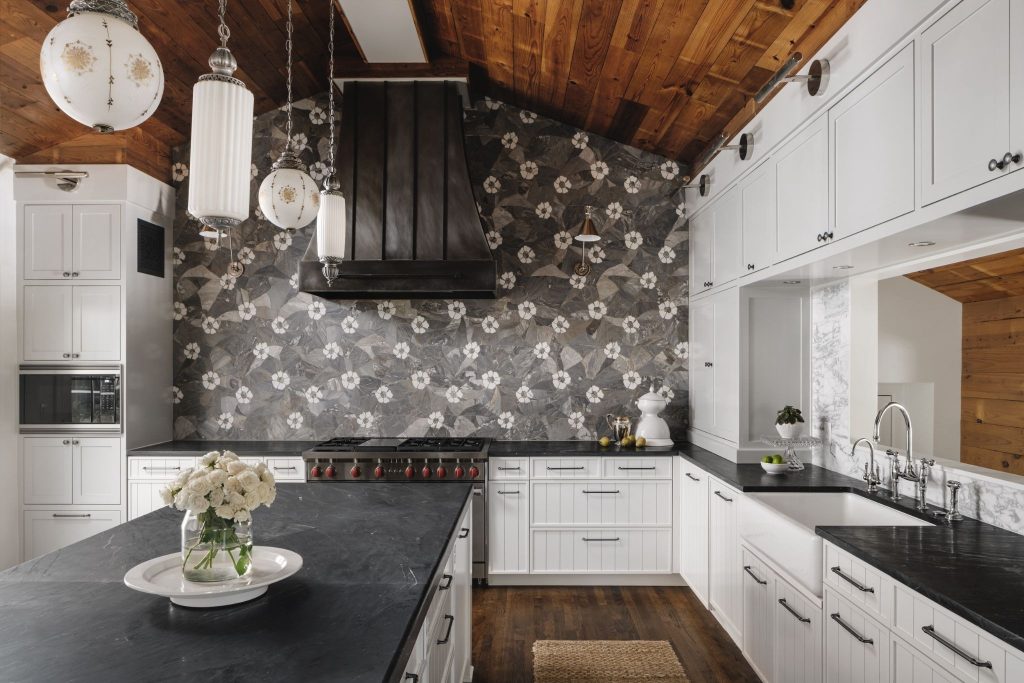
Caring for soapstone in a working kitchen is genuinely straightforward — no sealing schedule, no specialty cleaners, no professional maintenance — but a few daily habits protect both the stone and the mineral oil finish over time.
Cleaning
Mild soap and water is all soapstone countertop care requires day to day. No pH-neutral-only requirement, no stone-specific products. Harsher solvents are unnecessary and strip mineral oil faster than normal use, which just creates more oiling work.
Scratches
Soapstone sits lower on the Mohs hardness scale than granite and will scratch under normal kitchen use. That is the trade-off worth knowing before you commit — and it is a structural property of the material, not a fabrication quality issue. The good news: soapstone scratch repair is a five-minute DIY fix. Light sanding with coarse sandpaper followed by mineral oil application is all it takes. No professional repair, no permanent damage. Scratches either sand out or fold into the patina. Both outcomes are fine.
Long-Term Maintenance
After the first year of oiling, soapstone stabilizes into a consistent, rich patina that needs very little active attention. Oiling frequency drops significantly. Cleaning stays simple. At our Austin and Kerrville showrooms, soapstone is one of the surfaces we field the most questions about: specifically what the stone looks like six months in versus the day it was installed.
The answer is always the same — it looks better. Buyers still comparing options will find the soapstone vs. granite breakdown useful before that showroom visit.
See Soapstone in Person and Decide With Confidence
Reading this gives you the complete picture. The stain question has a real answer, the patina reality is manageable, and the day-to-day ownership is simpler than most surfaces you are comparing.
The next useful step is seeing it in person. At our Austin and Kerrville showrooms, we keep a surplus of soapstone samples — including oiled and unoiled stone side by side, so you can see exactly what the darkening process looks like before you commit. That conversation, backed by 20+ years of soapstone fabrication and installation experience in Central Texas, is more useful than another hour of reading.
Visit our Austin showroom or contact us when you are ready to compare materials, ask direct questions, and move forward with fewer unknowns.
Frequently Asked Questions About Soapstone and Staining
Can soapstone countertops stain?
No. Soapstone is non-porous and chemically inert, which means liquids cannot penetrate the surface and acids do not react with it. Unlike granite or marble, it does not require periodic sealing to maintain that protection. There is no mechanism for traditional staining to occur.
Does soapstone darken over time?
Yes, and that is expected. Soapstone darkens naturally through oxidation, water exposure, and contact with cooking oils. This is patina, not damage. Mineral oil accelerates the process and helps it happen evenly across the surface.
How do you remove stains from soapstone countertops?
True stains do not penetrate soapstone. What looks like a stain is usually organic oil residue oxidizing unevenly on unoiled soapstone. Mild soap and water handles most surface marks. Light sanding with coarse sandpaper followed by mineral oil resolves deeper discoloration.
Does soapstone need to be sealed?
No. Sealing is designed to fill pores and block liquid penetration. Soapstone has no meaningful pore structure, so a sealer has nothing to bond to and nothing to protect against. Unlike granite or quartzite, soapstone does not require sealing at installation or any point after.
What are the disadvantages of soapstone countertops?
Soapstone sits lower on the Mohs hardness scale than granite, which means it scratches more easily under normal kitchen use. It darkens unevenly if areas are left unoiled while others receive regular oil exposure. Its color range is limited, running predominantly gray to dark charcoal. Buyers who prefer a surface that stays visually static over time are usually better matched with a different material.
For more stone questions, visit the Alpha Granite FAQ.