
Granite edge profiles are often treated as a small detail, but they shape both how the slab performs and how it looks in the space. The edge is where granite is seen up close and used every day. It can sharpen the overall style of a kitchen or soften it.
The right edge makes granite feel deliberate and finished. The wrong one can distract from an otherwise strong slab. This is about choosing an edge that supports both the stone and the overall aesthetic.
How Do Granite Countertop Edges Affect the Look and Performance of the Slab?
With granite, the edge profile is not a styling detail added at the end. It directly affects how the slab wears, how mistakes show up, and how forgiving the countertop is over time.
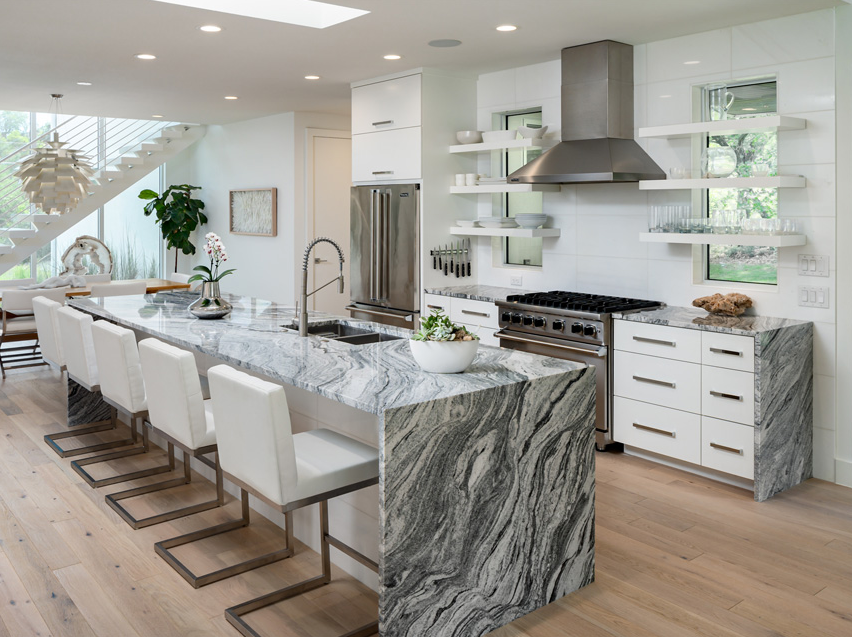
Granite Behaves Differently Than Other Countertop Materials
Granite countertops are cut from a single block of natural stone. There is no surface layer hiding what’s underneath. Because of that, the edge profile controls how the stone reacts once it is cut and installed.
What makes granite different at the edge:
- The stone is dense but brittle at sharp points
- Stress concentrates at corners and tight angles
- Veining and grain direction affect edge strength
- Natural fissures can show up more at the edge than on the surface
- The edge exposes the true structure of the slab
This is where granite differs from laminate or solid surface materials. Those materials have patterns that are uniform throughout. Granite is not. The right countertop edge works with those natural variables instead of fighting them.
Edges Influence Durability, Safety, and Maintenance
Most edge-related damage does not happen in the middle of the slab. It happens where the granite is touched, bumped, and cleaned the most.
Sharp edges concentrate force and are more likely to show chips over time, especially near sinks, dishwashers, and prep zones. Rounded edges spread impact and reduce stress points. Beveled edges sit in between. They offer definition without fully exposing the corner.
Maintenance follows the same pattern. Edges with fewer transitions are easier to clean and maintain, particularly around sinks and backsplashes where buildup happens fastest.
The Edge Profile Sets Expectations for the Entire Installation
The edge profile signals how the countertop should be read visually and functionally.
What different edge styles communicate:
- Straight and eased edges emphasize precision and clean lines
- Rounded edges feel softer and more forgiving in daily use
- Decorative edges draw attention to thickness and craftsmanship
- Minimal edges support contemporary kitchens and minimalist spaces
- Detailed edges lean traditional or transitional
This is why edge selection should not be isolated from the slab or layout. A strong slab paired with the wrong edge feels off. A simple edge chosen intentionally often lets the granite carry the overall aesthetic without distraction.
Countertop Edge Profiles That Work Best With Granite
Granite edge profiles are not interchangeable. Each one changes how the slab wears, how it looks once installed, and how forgiving it is over time. Below are the granite countertop edges that consistently work well with natural stone, and when each one makes sense.
Straight Edge
A straight edge creates clean, sharp lines that suit contemporary and minimalist kitchens. It keeps the focus on the granite slab itself, making colors and natural movement stand out without distraction. Because corners remain crisp, this edge requires precise fabrication to avoid sharp edges or weak points.
Best for: Minimalist kitchens, sleek cabinetry, slabs with strong natural movement
Eased Edge
An eased edge looks straight at first glance, but has a slightly softened top edge. It delivers the same clean appearance as a straight edge while reducing the risk of chipping and sharp corners. This makes it one of the most versatile and popular granite countertop edges.
Best for: Modern kitchens that still need everyday practicality
Half Bullnose
A half bullnose rounds the top edge while keeping the bottom line defined. It softens the countertop without losing structure and is easier to clean than more decorative profiles. This edge handles daily wear well and helps protect the most exposed edge of the slab.
Best for: Kitchens that balance durability with a classic look
Full Bullnose
A full bullnose fully rounds the granite edge profile from top to bottom. It creates a softer feel and reduces impact risk, which is why it remains a popular granite countertop choice in family homes. The tradeoff is a slightly softer visual line that draws less attention to slab thickness.
Best for: Traditional kitchens and households where safety and durability matter most
Beveled Edge
A beveled edge introduces a subtle angled cut along the top edge of the granite. It catches light without overpowering the slab and adds definition while remaining relatively easy to maintain. This edge works best when the granite pattern is consistent and not overly busy.
Best for: Clean designs that want a bit more character than a straight edge
Chiseled Edge
A chiseled edge has an intentionally rough, hand-worked appearance. It highlights the natural character of granite and creates an organic feel that contrasts with smooth surfaces. Because the look is bold, it works best when used deliberately and sparingly.
Best for: Rustic spaces or designs that lean into natural stone texture
Ogee Edge
An ogee edge features layered curves that feel classic and architectural. It adds visual weight and detail to the countertop edge, making it a strong choice for high-end kitchens with detailed cabinetry. This edge works best on thicker slabs where the profile can be fully appreciated.
Best for: Traditional homes and high-end kitchens with decorative details
Cove Edge
A cove edge curves inward, creating a recessed shadow line along the countertop. It offers a softer alternative to ogee while still adding depth and dimension. Cove edges pair well with traditional kitchens that want refinement without heavy ornamentation.
Best for: Classic spaces that need subtle detail rather than bold edges
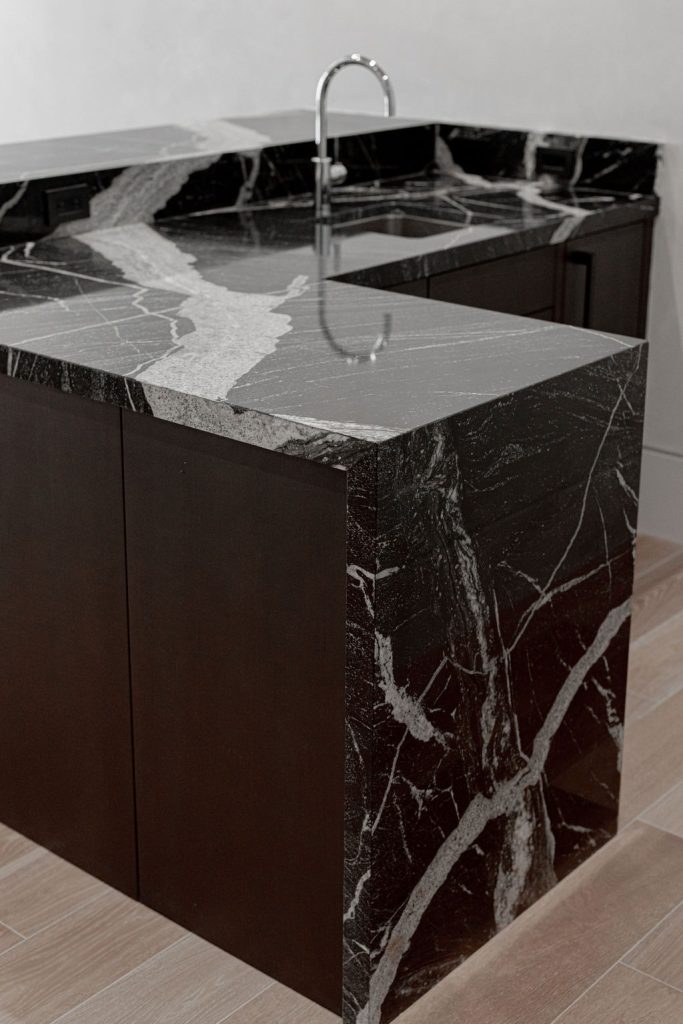
Waterfall Edge
A waterfall edge carries the granite vertically down the sides of an island or cabinet, turning the slab into a focal point. This edge is less about protection and more about visual impact. Fabrication precision is critical to ensure seams align and patterns flow naturally.
Best for: Intentional design moments where the granite is meant to stand out
Choosing the Right Granite Edge Is About Fit, Not Trend
The best granite edge is the one that makes sense for your slab, your layout, and how the space is used every day. Edge profiles are not decorations added at the end. They are part of fabrication planning and long-term performance.
Seeing edge profiles on real granite makes a difference. So does talking through use, layout, and expectations before a decision is made.
FAQs: Granite Countertop Edge Profiles
What is the most popular granite countertop edge profile?
The eased edge is the most popular granite countertop edge profile. It keeps a clean, modern look while slightly softening the top edge to reduce chipping and sharp corners. It works well across many kitchen styles and performs reliably in daily use, which is why fabricators recommend it so often.
Which granite edge is easiest to clean and maintain?
Straight and eased edges are the easiest to clean and maintain. They have minimal grooves or transitions, which means fewer places for debris or residue to collect. This makes them especially practical around sinks and backsplashes where daily cleaning matters most.
Are straight edges more likely to chip on granite?
Straight edges can be more prone to chipping if fabrication is not done well or if the countertop sees heavy impact at corners. Granite is strong, but sharp corners concentrate stress. An eased edge offers a similar look while reducing that risk.
Does the edge profile affect the cost of a granite countertop?
Yes. Simpler edge profiles like straight, eased, and half bullnose typically cost less because they require less fabrication time. More detailed edges, such as ogee, cove, or waterfall, increase labor and precision requirements, which raises the overall cost.
Can the same edge profile be used in kitchens and bathrooms?
Yes. Most granite edge profiles work equally well in kitchens and bathrooms. The decision usually comes down to use and scale. Bathrooms often benefit from simpler edges due to tighter spaces, while kitchens may accommodate more detailed profiles depending on the slab and layout.
How do you choose the right granite edge for your slab?
Start with the slab itself. Look at thickness, pattern movement, and finish. Then consider how the countertop will be used and where it will see the most contact. The right edge supports the stone’s natural character and fits the way the space functions, not just how it looks in photos.